

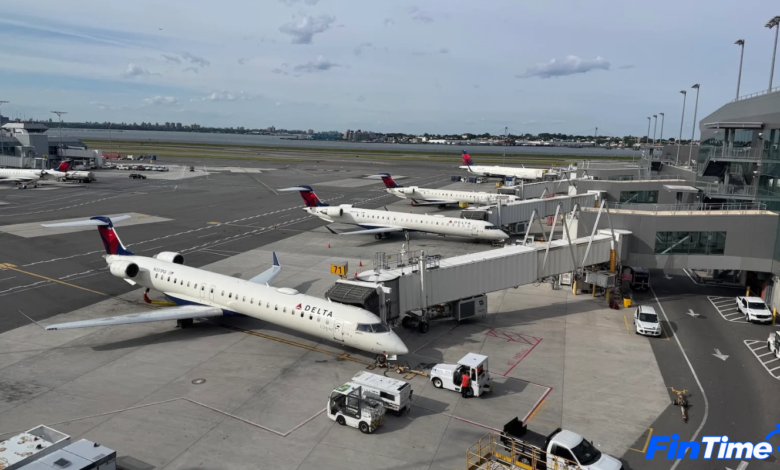
elta Air Lines has made some important changes to its flight network, bringing an end to three routes that once connected passengers to different destinations. The biggest surprise is the closure of the New York–Brussels service, a connection that had served travelers for approximately 34 years.
The news behind Delta Ending Three Routes has attracted attention from frequent flyers, international travelers, and aviation enthusiasts. For many passengers, these changes mean adjusting travel plans, finding alternative flights, or choosing a different airline.
But why did Delta make these decisions? Which routes have disappeared, and what do the changes mean for people who regularly travel between the affected cities?
What Is Delta Ending Three Routes All About?
Delta Ending Three Routes refers to the airline’s decision to discontinue three specific connections as part of changes to its domestic and international flight network.
These are not simply temporary delays or individual flight cancellations. They represent longer-term schedule changes that remove particular nonstop services from Delta’s network.
The three affected routes are:
| Route | Final service | Main change |
|---|---|---|
| New York JFK–Brussels | January 5–6, 2026 | International service discontinued |
| Atlanta–Santa Barbara | January 19–20, 2026 | Domestic nonstop service discontinued |
| Salt Lake City–Fairbanks | September 2025 | Seasonal service not returning |
The three routes have different histories and reasons behind their closures. However, they share one important feature: Delta decided to concentrate its resources on other parts of its network.
The New York–Brussels connection is particularly significant because it began in December 1991. Its closure marked the end of approximately 34 years of service between the two cities.
Read More: Cleveland Browns vs San Francisco 49ers Match Player Stats (Nov 30, 2025): Full Recap
Delta Ends Its 34-Year New York–Brussels Route
The most notable development in Delta’s route changes is the closure of its nonstop service between John F. Kennedy International Airport (JFK) in New York and Brussels Airport (BRU) in Belgium.
This route connected two important international travel markets for more than three decades.
When Did the Route First Begin?
Delta launched its New York–Brussels service in December 1991. The airline initially operated the connection using Airbus A310 aircraft.
Over the years, the service became part of Delta’s transatlantic network, helping business travelers, tourists, and passengers visiting family move between the United States and Belgium.
The route also provided convenient access to Brussels, a major European destination known for its international institutions, business activity, history, and tourism.
However, the service did experience an interruption during the COVID-19 pandemic before returning. Therefore, its 34-year history refers to the period between its launch and retirement, rather than 34 uninterrupted years of flying.
When Did Delta Stop Flying to Brussels From JFK?
Delta scheduled its final New York-to-Brussels departure for January 5, 2026. The final return flight from Brussels operated on January 6.
Before its cancellation, the route operated four times per week using a Boeing 767-300ER.
This aircraft was commonly used for long-distance international travel and provided passengers with a direct connection across the Atlantic.
Delta’s decision ended a familiar option for travelers who preferred flying directly between New York and Brussels.
Why Did Delta Cancel the Brussels Route?
Delta explained that it was transitioning its Brussels service from New York to Atlanta to better match customer demand.
This decision reflects the importance of hub airports in airline planning.
Instead of maintaining separate services from multiple cities, an airline may concentrate flights through a major connecting hub. This approach can help organize aircraft schedules and connect passengers with more destinations.
Atlanta is Delta’s largest hub and offers extensive domestic and international connections.
Importantly, the cancellation does not mean Delta has abandoned Brussels. The airline continued its Brussels service from Atlanta, with the new schedule beginning March 8, 2026, and increasing to daily service in May.
Delta Discontinues Atlanta–Santa Barbara Flights
The second route affected by Delta’s network changes connected Hartsfield-Jackson Atlanta International Airport (ATL) with Santa Barbara Airport (SBA) in California.
Unlike the Brussels connection, this was a relatively new route.
Delta introduced Atlanta–Santa Barbara service in June 2024. It offered travelers a direct connection between the southeastern United States and California’s beautiful central coast.
When Did the Atlanta–Santa Barbara Route End?
Delta announced that it would discontinue the route in November 2025.
The final Atlanta-to-Santa Barbara flight was scheduled for January 19, 2026. The final return service operated on January 20.
For Santa Barbara residents, the cancellation meant losing a direct connection to one of the country’s busiest airline hubs.
Passengers traveling to Atlanta would need to consider other airlines or connecting itineraries.
Why Did Delta Cancel This Domestic Route?
One important factor was aircraft and crew availability.
Santa Barbara Airport representatives explained that Delta had experienced logistical challenges involving aircraft and crew staffing.
Rather than continuing to support the Atlanta route, the airline decided to focus more resources on its existing Salt Lake City service.
This is an important distinction because airline route cancellations do not always happen because passengers stop traveling.
Sometimes, an airline has limited aircraft, scheduling difficulties, or operational challenges that make one route less practical than another.
What Happens to Santa Barbara Passengers?
There is still good news for travelers.
Delta continues to serve Santa Barbara through Salt Lake City, providing connections to numerous destinations across the United States and beyond.
The airport also reported plans to increase Delta’s Salt Lake City service to as many as three daily departures.
For passengers, this means the Atlanta connection disappears, but access to Delta’s broader network remains available through another major hub.
Travelers heading to Atlanta can also compare connecting flights and services offered by other airlines.
Delta Removes Salt Lake City–Fairbanks Seasonal Service
The third route in Delta Ending Three Routes connected Salt Lake City International Airport (SLC) with Fairbanks International Airport (FAI) in Alaska.
Unlike the other two connections, this was a seasonal service.
Seasonal routes allow airlines to serve destinations during periods when passenger demand is expected to be stronger. They are especially common in tourist destinations where travel patterns change throughout the year.
Why Was the Fairbanks Route Discontinued?
Delta operated the Salt Lake City–Fairbanks connection during the summer season.
The airline had originally planned to bring the route back in June 2026. However, schedule updates showed that the planned return would not take place.
The Points Guy reported the cancellation in November 2025.
Although the route’s performance may have influenced the decision, Delta did not publicly establish a specific passenger-demand figure as the reason for this particular cancellation.
This distinction matters because it is easy to assume that every discontinued flight was unsuccessful. Airline network decisions can involve several factors, including aircraft availability, operating costs, competition, and scheduling priorities.
Can Passengers Still Fly to Fairbanks With Delta?
Yes. Delta passengers can still reach Fairbanks through other parts of its network.
Seattle remains an important option for year-round connections, while Minneapolis–Saint Paul has also offered seasonal service.
Travelers should compare their available departure dates because seasonal schedules can change from one year to another.
The removal of the Salt Lake City connection therefore does not eliminate Delta’s access to Fairbanks. It simply changes the available travel options.
Why Is Delta Ending Three Routes?
Delta’s decisions raise an important question: why would a major airline remove established connections from its schedule?
There is rarely just one answer. Airlines regularly review their networks to determine where aircraft and employees can be used most effectively.
Here are some of the main factors that help explain these changes.
1. Changing Passenger Demand
Passenger demand plays an important role in airline planning.
Airlines study booking patterns, seasonal travel, business traffic, ticket revenue, and competition before deciding whether to maintain a route.
A connection that performs well during one period might become less attractive during another.
For example, a seasonal destination may attract many summer visitors but experience weaker demand during colder months.
2. Aircraft Availability
Aircraft are valuable resources, and airlines must distribute them carefully.
A plane assigned to one route cannot simultaneously operate another service. Therefore, moving aircraft toward routes with stronger commercial opportunities can make business sense.
Delta’s Santa Barbara changes also highlight how aircraft and crew availability can influence scheduling decisions.
3. Stronger Focus on Major Hubs
Delta operates a large hub network, with Atlanta, Detroit, Minneapolis, Salt Lake City, and other major airports supporting passenger connections.
A hub-based strategy allows airlines to bring passengers from smaller cities into major airports before connecting them to other destinations.
The decision to move Brussels service from JFK to Atlanta is a clear example of this approach.
4. Operating Costs and Competition
Airlines must consider fuel, airport fees, staffing, maintenance, aircraft utilization, and competition.
A route may attract passengers but still be difficult to operate profitably.
Similarly, another airline might offer stronger competition on a particular connection.
These factors can influence whether a carrier keeps a route, changes its frequency, or removes it entirely.
It is important to remember that Delta has not publicly attributed all three cancellations to one single financial reason.
How Do These Route Cancellations Affect Travelers?
The biggest impact of Delta Ending Three Routes falls on passengers who previously depended on these nonstop flights.
A nonstop connection saves time, reduces airport transfers, and makes travel more predictable.
When a route disappears, passengers may have to change their travel arrangements.
Here are some possible effects:
- Longer journeys: Connecting flights can increase total travel time.
- Different departure airports: Some passengers may need to travel to another airport.
- Higher travel expenses: Alternative flights may have different fares.
- Schedule changes: Travelers may need to adjust departure and arrival times.
- Fewer nonstop options: Passengers lose the convenience of a direct connection.
Business travelers may find these changes particularly inconvenient because they often need reliable schedules.
Families and tourists may also face challenges when coordinating connecting flights, luggage, and airport transfers.
However, the closures do not mean passengers can no longer reach these destinations. Alternative airline services and connecting routes remain important options.
What Are the Best Alternatives for Affected Delta Passengers?
Passengers who previously booked one of these three routes should explore alternative connections before making new travel arrangements.
The best option depends on the destination, travel date, budget, and preferred airline.
Alternatives for New York–Brussels Travelers
Passengers traveling between New York and Brussels can consider:
- Brussels Airlines: The airline offers nonstop service between JFK and Brussels.
- United Airlines: Travelers can check nonstop flights from nearby Newark Liberty International Airport.
- Delta via Atlanta: Passengers can connect through Atlanta and continue to Brussels on Delta.
Brussels Airlines is an especially useful alternative for people who want to avoid a connection.
However, passengers should compare flight times, baggage policies, and ticket prices before booking.
Alternatives for Atlanta–Santa Barbara Travelers
Travelers who previously used Delta’s direct Atlanta service can consider:
- Flying from Santa Barbara to Salt Lake City and connecting to another destination.
- Comparing alternative airlines and departure airports.
- Checking flights through major California airports when convenient.
- Looking at connecting itineraries through other major airline hubs.
Delta’s increased Salt Lake City service provides another way to access its wider network.
Alternatives for Salt Lake City–Fairbanks Travelers
Passengers heading to Fairbanks can consider:
- Delta connections through Seattle.
- Seasonal Delta connections through Minneapolis–Saint Paul, when available.
- Other airlines serving Fairbanks from different U.S. cities.
- Connecting flights through Alaska’s larger travel gateways.
The best alternative depends on the season. Travelers should avoid assuming that a route available during summer will also operate during winter.
How to Handle a Delta Flight Cancellation or Schedule Change
If you already purchased a ticket for one of the affected routes, you should not wait until your departure date to check your reservation.
Airline schedule changes can affect connecting flights, hotel bookings, rental cars, and other travel arrangements.
Here are five practical steps to follow.
Step 1: Check Your Booking
Open your Delta reservation and review the latest itinerary.
Look for changes to departure times, arrival airports, flight numbers, and connections.
Make sure every part of your journey still works.
Step 2: Check Your Email
Delta generally contacts affected passengers about significant schedule changes.
Check your inbox, spam folder, and the email address associated with your booking.
If you booked through a travel agency, contact that agency as well.
Step 3: Review Alternative Flights
Compare available alternatives before accepting a new itinerary.
Consider:
- Total journey time.
- Number of connections.
- Airport transfer requirements.
- Baggage arrangements.
- Arrival and departure times.
A slightly more expensive nonstop flight may be more convenient than a cheaper itinerary with several connections.
Step 4: Understand Your Refund Options
If Delta makes a significant change or cancels your flight, your options may depend on the circumstances and applicable passenger-protection rules.
For eligible U.S. domestic and international itineraries, Department of Transportation rules generally require a refund when an airline cancels or significantly changes a flight and the passenger declines the alternative offered.
Refund eligibility can depend on how the ticket was purchased and the specific situation.
Passengers should review the terms of their booking and ask Delta to explain their available options.
Step 5: Recheck Your Journey Before Departure
Even after receiving a replacement itinerary, check your flight status regularly.
Airline schedules can change again, especially during busy travel periods.
It is also wise to confirm baggage arrangements if your replacement journey involves multiple airlines.
What Does Delta Ending Three Routes Mean for the Airline’s Future?
These route closures provide an interesting look at how Delta manages its international and domestic network.
The airline is not simply removing destinations from its overall service map. Instead, it is changing how passengers reach certain places.
For example, Delta’s Brussels service moved from New York to Atlanta. Santa Barbara retained Delta connectivity through Salt Lake City, while Fairbanks remained accessible through other Delta connections.
This suggests a greater focus on matching aircraft capacity and schedules with passenger demand and operational needs.
It also highlights the competitive nature of the airline industry.
Airlines constantly evaluate their routes because passenger preferences, fuel expenses, airport operations, and aircraft availability can change.
Will Delta Cancel More Routes?
It is possible that Delta will make additional network adjustments in the future.
However, one group of cancellations should not automatically be treated as evidence of a wider shutdown.
Airlines regularly add new flights while removing others.
A route cancellation may happen because an airline wants to use its aircraft elsewhere, improve connections through a hub, or respond to changing travel patterns.
Passengers should rely on confirmed airline announcements and published schedules rather than rumors or social media speculation.
Important Facts About Delta’s Three Route Closures
Here is a quick overview of the most important details.
| Detail | Information |
|---|---|
| Airline | Delta Air Lines |
| Major international route | New York JFK–Brussels |
| International route launch | December 1991 |
| International route retirement | January 2026 |
| Domestic route 1 | Atlanta–Santa Barbara |
| Domestic route 2 | Salt Lake City–Fairbanks |
| Main planning considerations | Demand, aircraft, crew, and network strategy |
| Brussels alternative | Delta service through Atlanta |
| Santa Barbara alternative | Delta service through Salt Lake City |
| Fairbanks alternative | Delta connections through other hubs |
The most memorable part of this story is the retirement of the JFK–Brussels connection after approximately 34 years of service.
For frequent travelers, it is a reminder that even long-established airline routes can eventually disappear.
Conclusion
The story of Delta Ending Three Routes highlights how quickly the airline industry can change. Delta has discontinued three connections: New York JFK–Brussels, Atlanta–Santa Barbara, and Salt Lake City–Fairbanks.
The biggest change is the retirement of the JFK–Brussels route, which began in December 1991 and served travelers for approximately 34 years. Its final flight in January 2026 marked the end of an important chapter in Delta’s international network.
The other two cancellations also affected passengers who relied on convenient domestic connections. However, alternative flights and connections through major hubs remain available.
For travelers, the most important step is to check updated schedules, review alternative flights, and understand their options when an airline changes a booking.
Ultimately, Delta’s decisions show that even historic routes are not guaranteed to operate forever. Airlines must continually adapt to changing demand, operational challenges, and passenger needs.
FAQs
1. Which Three Routes Is Delta Ending?
The three routes are New York JFK to Brussels, Atlanta to Santa Barbara, and Salt Lake City to Fairbanks. The Brussels and Santa Barbara services ended in January 2026, while the seasonal Fairbanks service did not return for summer 2026.
2. How Long Did Delta’s New York–Brussels Route Operate?
Delta launched the New York JFK–Brussels route in December 1991. It operated until January 2026, representing approximately 34 years of route history, although the service experienced a pandemic-related interruption.
3. Why Did Delta Cancel Its Brussels Flight?
Delta decided to transition its Brussels service from New York JFK to Atlanta to better align its network with customer demand. The airline continued serving Brussels through its Atlanta hub.
4. Is Delta Still Flying to Santa Barbara?
Yes. Delta continues to serve Santa Barbara through Salt Lake City. Although the Atlanta–Santa Barbara nonstop route ended in January 2026, passengers can still connect to other destinations through Salt Lake City.




One Comment