

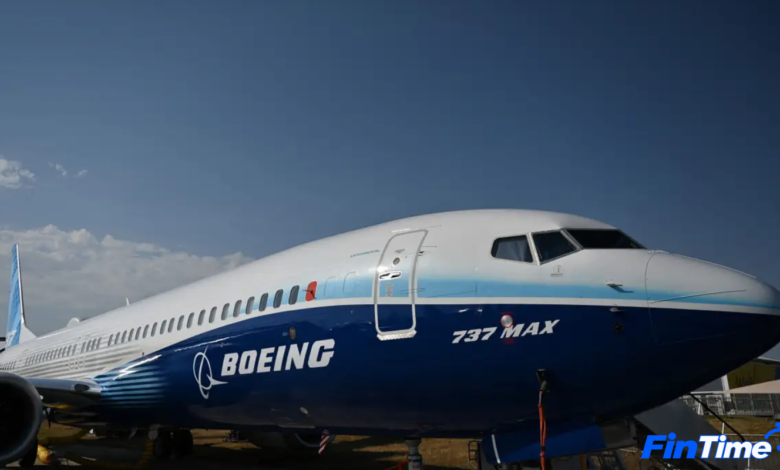
Booking a flight should feel exciting, not stressful. However, concerns about Boeing aircraft have made many passengers question which planes they should choose when buying an airline ticket. Following several high-profile accidents and federal investigations, the search for Which Boeing Planes to Avoid has become increasingly common among nervous travelers.
Boeing has produced some of the world’s most widely used commercial aircraft. Millions of passengers fly on its planes every year. Yet investigations involving the 737 MAX, manufacturing quality problems, and aircraft components have raised serious questions about safety oversight.
So, should passengers avoid every Boeing aircraft? Not necessarily.
The important thing is to understand which aircraft have faced documented safety concerns, what federal investigators actually discovered, and whether those problems have been corrected.
Important distinction: No Boeing model should automatically be considered unsafe simply because of its manufacturer or model name. Aircraft safety depends on the specific airplane, its maintenance, required inspections, configuration, and regulatory approval.
Which Boeing Planes to Avoid? A Quick Overview
If you are researching Boeing aircraft safety, some models deserve closer attention because of documented accidents, investigations, or technical problems.
Here is a quick overview:
| Boeing aircraft | Main safety concern | What passengers should know |
|---|---|---|
| 737 MAX 8 | MCAS-related crashes | Major design changes and recertification followed |
| 737 MAX 9 | Door-plug separation | Affected aircraft underwent mandatory inspections |
| 737-800 | Historical rudder-control and other technical investigations | Individual aircraft condition matters |
| 787 Dreamliner | Battery overheating incidents | Design changes and regulatory action followed |
| 777 family | Component-specific technical issues | Follow applicable inspection and airworthiness requirements |
These aircraft do not all have the same safety history. Some experienced serious accidents, while others faced technical problems that led to engineering changes or inspections.
The 737 MAX 8 and 737 MAX 9 have attracted particularly significant public attention because of their separate investigations.
Read More: Delta Ending Three Routes: One Route Served Passengers for 34 Years
Boeing 737 MAX 8: The Aircraft Behind Two Deadly Crashes
The Boeing 737 MAX 8 is one of the most widely discussed aircraft in modern aviation safety debates.
Its reputation was seriously damaged after two fatal accidents involving Lion Air Flight 610 and Ethiopian Airlines Flight 302.
Together, these accidents resulted in the deaths of 346 people.
What Happened to the Boeing 737 MAX 8?
The first major accident occurred on October 29, 2018, when Lion Air Flight 610 crashed into the Java Sea shortly after taking off from Jakarta, Indonesia.
All 189 people aboard died.
A second accident occurred on March 10, 2019, when Ethiopian Airlines Flight 302 crashed shortly after departure from Addis Ababa.
All 157 people aboard lost their lives.
Investigations identified problems involving the Maneuvering Characteristics Augmentation System, commonly known as MCAS.
MCAS was designed to automatically adjust the aircraft’s horizontal stabilizer under certain flight conditions.
However, investigators found that faulty angle-of-attack sensor information could trigger repeated nose-down commands. Pilot awareness and training issues also played important roles in the accidents.
The tragedies exposed serious weaknesses in aircraft design, certification, communication, and pilot training.
What Did the Federal Investigation Discover?
Following the accidents, aviation authorities examined the aircraft’s flight-control system and certification process.
The FAA identified several changes that needed to happen before the 737 MAX could return to commercial service.
These included:
- Updated flight-control computer software.
- Changes to MCAS activation logic.
- Improvements to cockpit warning systems.
- Revised pilot training requirements.
- Additional aircraft inspections and maintenance procedures.
The FAA officially approved the 737 MAX’s return to service on November 18, 2020, following a 20-month review.
The aircraft was not simply allowed to fly again without modifications. Operators had to complete required changes and meet the regulator’s conditions before returning individual aircraft to service.
Should You Avoid the Boeing 737 MAX 8?
The 737 MAX 8 deserves attention because of its history, but the two fatal accidents do not establish that every aircraft currently operating is unsafe.
The FAA approved significant design and training changes before allowing the aircraft to return.
For passengers, the more useful approach is to consider the aircraft’s current regulatory status and the airline operating it rather than treating every MAX 8 flight as automatically dangerous.
Boeing 737 MAX 9: The Door Plug Investigation
Another aircraft that deserves attention is the Boeing 737 MAX 9.
In January 2024, Alaska Airlines Flight 1282 experienced a frightening incident when a mid-exit door plug separated from the aircraft during flight.
The incident renewed public concerns about Boeing’s manufacturing and quality-control processes.
What Happened on Alaska Airlines Flight 1282?
On January 5, 2024, Alaska Airlines Flight 1282 departed Portland International Airport in Oregon.
The aircraft was climbing through approximately 14,830 feet when a left mid-exit door plug separated from the fuselage.
The sudden opening caused rapid cabin depressurization.
Passengers experienced a terrifying situation as oxygen masks dropped from overhead compartments. Some personal belongings were pulled out through the opening.
A flight attendant and seven passengers received minor injuries. Fortunately, the pilots successfully returned the aircraft to Portland.
There were 171 passengers and crew members aboard, and the aircraft sustained substantial damage.
What Did the NTSB Discover?
The NTSB conducted an extensive investigation into the incident.
Its final findings, released on June 24, 2025, identified Boeing’s inadequate training, guidance, and oversight of factory workers as the probable cause.
Investigators found that four bolts required to secure the door plug were missing.
The investigation revealed that the door plug had been opened during manufacturing to allow repair work. However, the required documentation was missing, and the closure process did not receive the necessary quality assurance inspection.
The NTSB also criticized the FAA’s ineffective oversight of repeated manufacturing problems.
The findings raised serious questions about Boeing’s production procedures and internal safety culture.
Did the FAA Ground the Boeing 737 MAX 9?
Yes.
Following the incident, the FAA ordered the temporary grounding of approximately 171 Boeing 737-9 MAX aircraft worldwide that had the affected door-plug configuration.
The grounding began on January 6, 2024.
Affected aircraft had to undergo enhanced inspections before returning to passenger service.
The FAA required checks of door plugs, components, and fasteners, along with corrective maintenance where necessary.
Once the required inspections were completed and the aircraft met regulatory conditions, they could return to service.
Should Passengers Avoid the Boeing 737 MAX 9?
The MAX 9 has a serious manufacturing incident in its history, so passengers may reasonably want to understand its inspection requirements.
However, it is important to distinguish between the aircraft involved in the accident and the entire aircraft model.
The grounding applied to specific configurations, and mandatory inspections were required before affected aircraft could fly again.
A passenger should not assume that every Boeing 737 MAX 9 currently operating has the same unresolved problem.
Boeing 737-800 and Other 737 Next Generation Aircraft
The Boeing 737-800 is a member of the Next Generation (NG) family.
It is different from the newer 737 MAX family, although both belong to the broader 737 series.
The 737-800 has been widely used by airlines around the world for domestic and international short- and medium-haul flights.
However, its long operational history does not mean it has never experienced technical problems.
What Safety Concerns Have Investigators Identified?
One example involves rudder control systems.
In September 2024, the NTSB issued urgent safety recommendations concerning certain Boeing 737NG and 737 MAX aircraft fitted with Collins Aerospace SVO-730 rudder rollout guidance actuators.
The investigation followed an incident involving United Airlines Flight 1539, a Boeing 737-8, during landing at Newark Liberty International Airport on February 6, 2024.
The flight crew experienced rudder pedals that remained stuck in their neutral position during landing rollout.
The captain used the nosewheel steering tiller to help control the aircraft’s direction.
Fortunately, the aircraft stopped safely, and none of the 161 people aboard were injured.
The NTSB raised concerns that moisture could accumulate inside certain actuators and freeze, potentially restricting rudder movement.
It also warned that the recommended response to a jammed rudder could create excessive control inputs in certain circumstances.
Does This Mean Every Boeing 737-800 Is Unsafe?
No.
The NTSB’s investigation concerned specific rudder-system components and configurations. It did not establish that every 737-800 had the same defect.
The 737-800 also has a long history of commercial operation.
Passengers should understand that aircraft maintenance requirements can apply to specific components, production batches, or configurations rather than every aircraft sharing a model designation.
This is why checking an airline’s maintenance practices and regulatory compliance is more useful than avoiding an entire aircraft family without considering the evidence.
Boeing 787 Dreamliner: Battery Fire Investigations
The Boeing 787 Dreamliner is another aircraft that experienced a major technical controversy.
Unlike the 737 MAX incidents, the Dreamliner’s early safety concerns involved its lithium-ion battery system.
The 787 was introduced as a modern long-distance aircraft designed to improve fuel efficiency and passenger comfort.
However, two battery-related incidents in January 2013 resulted in an international safety response.
What Happened to the Boeing 787?
On January 7, 2013, smoke was discovered aboard a Japan Airlines Boeing 787 parked at Boston Logan International Airport.
Investigators found a fire involving the aircraft’s auxiliary power unit battery.
Another battery-related incident occurred on January 16, 2013, involving an All Nippon Airways 787 that made an emergency landing in Japan after a battery problem.
The incidents raised concerns about overheating and the possibility of thermal runaway.
Thermal runaway occurs when a battery cell experiences an uncontrolled increase in temperature that can spread to neighboring cells.
What Did Federal Investigators Find?
The NTSB determined that an internal short circuit in a lithium-ion battery cell caused the Boston incident.
Investigators also criticized Boeing’s original battery design because it did not adequately mitigate the worst effects of an internal short circuit.
The FAA responded by grounding the 787 fleet temporarily while Boeing developed modifications.
The revised battery system included improved cell protection, battery enclosures, and measures designed to contain heat and prevent the spread of a battery failure.
The FAA approved the modified battery design in April 2013.
The aircraft subsequently returned to passenger service after the required changes.
Should You Avoid the Boeing 787 Dreamliner?
The 787’s battery history is important, but the original problem was addressed through engineering changes and regulatory approval.
Its early grounding should not be treated as evidence that every 787 currently flying has an unresolved battery defect.
Passengers should focus on current airworthiness requirements and airline maintenance rather than judging the aircraft solely by an incident from 2013.
What Did Federal Investigations Reveal About Boeing’s Safety Culture?
The aircraft-specific incidents are only part of the story.
Federal investigations also examined Boeing’s wider manufacturing and oversight systems.
These investigations are important because commercial aircraft safety depends on more than good engineering. It also requires strong quality control, proper employee training, accurate documentation, and effective regulatory supervision.
FAA Findings About Manufacturing Quality
In March 2024, the FAA announced findings from a six-week audit of Boeing and Spirit AeroSystems.
The audit identified multiple instances of alleged noncompliance involving manufacturing quality-control requirements.
The findings included concerns about:
- Manufacturing process control.
- Parts handling and storage.
- Product control.
- Quality assurance procedures.
- Compliance with approved production requirements.
The FAA also stopped Boeing from expanding 737 MAX production until it could demonstrate improved quality control.
This was a significant response because the agency wanted the manufacturer to address deeper production problems instead of focusing only on individual aircraft incidents.
FAA Proposed More Than $3 Million in Penalties
In September 2025, the FAA announced proposed civil penalties totaling $3,139,319 against Boeing.
The agency identified hundreds of quality-system violations at Boeing’s 737 factory in Renton, Washington, and Spirit AeroSystems’ factory in Wichita, Kansas.
It also raised concerns about interference with the independence of aviation safety officials.
These findings demonstrated that federal scrutiny extended beyond one door-plug incident.
However, a proposed civil penalty should not be confused with a finding that every Boeing aircraft is unsafe. It addresses regulatory violations and company practices.
Which Boeing Planes Are Safest to Fly On?
A common question among nervous passengers is which Boeing aircraft they should choose instead.
There is no official ranking that identifies one Boeing model as the safest for every passenger. Safety depends on the aircraft’s maintenance history, configuration, operator, and compliance with applicable airworthiness directives.
Nevertheless, passengers can use a few general considerations when comparing aircraft.
Boeing 777
The Boeing 777 is a widely used long-haul aircraft family.
It has operated with major international airlines for decades and is designed for long-distance travel.
Like other aircraft, it can be affected by technical issues and mandatory inspections. However, its operating history should be considered alongside the maintenance and safety record of the individual airline.
Boeing 787 Dreamliner
Despite its early battery problems, the Boeing 787 has continued operating after the required design modifications.
It offers modern cabin technology, improved fuel efficiency, and long-distance capabilities.
Passengers should not automatically avoid the Dreamliner because of its 2013 battery incidents.
Boeing 737 Next Generation
The 737 Next Generation family includes the 737-600, 737-700, 737-800, and 737-900 series.
These aircraft have been used extensively for short- and medium-distance flights.
They have also been subject to various airworthiness directives over the years.
The important point is that an aircraft model’s age or previous technical problems do not automatically determine its current safety.
A useful rule: Choose an airline with strong maintenance standards, proper pilot training, and a good operational safety record rather than relying entirely on the aircraft’s model name.
How to Check Which Boeing Aircraft You Will Fly On
Passengers do not need to be aviation experts to find out which aircraft is operating their flight.
A few simple steps can help you make a more informed booking decision.
Step 1: Check the Airline’s Booking Page
When searching for flights, look for the aircraft information displayed alongside the flight details.
Airlines commonly identify aircraft using descriptions such as:
- Boeing 737-800
- Boeing 737 MAX 8
- Boeing 737 MAX 9
- Boeing 777-300ER
- Boeing 787-9
Remember that aircraft assignments can change after booking.
Step 2: Use an Airline Flight Information Service
Flight-tracking services can help identify the aircraft assigned to a particular flight.
Check the aircraft type and registration when available.
The registration identifies an individual airplane, making it easier to distinguish between aircraft belonging to the same model family.
Step 3: Check the Aircraft’s Maintenance and Regulatory Status
Passengers generally cannot access an airline’s complete maintenance records.
However, you can check public aviation safety announcements and regulatory information.
Look for:
- FAA grounding announcements.
- Applicable airworthiness directives.
- Required inspection notices.
- Airline operational updates.
- Confirmed aircraft-related safety restrictions.
These sources are more reliable than unverified social media claims.
Step 4: Contact the Airline if You Have Concerns
If you are uncomfortable with a particular aircraft assignment, contact the airline.
Ask whether another flight is available and whether changing your reservation involves additional costs.
Keep in mind that airlines do not always guarantee a specific aircraft model. Aircraft substitutions are a normal part of airline operations.
Practical Tips for Nervous Passengers Booking Boeing Flights
If Boeing safety news makes you uncomfortable, you can take several practical steps before traveling.
1. Research the airline, not just the manufacturer.
An airline’s maintenance systems, pilot training, and safety procedures are important factors in safe operations.
2. Check recent regulatory announcements.
Look for official FAA and aviation authority information rather than relying on alarming headlines.
3. Understand the difference between an investigation and a grounding.
An investigation examines an incident. A grounding is a specific regulatory action that prevents affected aircraft from flying until required conditions are met.
4. Avoid making decisions based on aircraft age alone.
Older aircraft can remain airworthy when properly maintained, while newer aircraft still require inspections and ongoing maintenance.
5. Keep your booking flexible when possible.
If you are particularly uncomfortable with a certain flight, compare alternative departures and review the airline’s change policy.
6. Do not panic over normal aircraft sounds.
Engine noise, landing gear movement, wing movement, and turbulence are normal parts of commercial aviation. They do not automatically indicate a technical problem.
Important Boeing Safety Statistics Passengers Should Know
The following figures help put the major investigations into perspective.
| Event or finding | Important figure |
|---|---|
| Lion Air Flight 610 fatalities | 189 |
| Ethiopian Airlines Flight 302 fatalities | 157 |
| Total fatalities in the two 737 MAX crashes | 346 |
| Alaska Airlines Flight 1282 minor injuries | 8 |
| 737-9 MAX aircraft initially grounded in January 2024 | Approximately 171 |
| NTSB recommendations following Flight 1282 investigation | 19 new |
| FAA proposed Boeing penalties in September 2025 | $3,139,319 |
| FAA 737 MAX recertification review | 20 months |
These statistics come from the documented federal investigations and regulatory announcements discussed above.
One important point deserves attention: accident figures should never be used alone to compare aircraft safety. Meaningful comparisons require information about flight hours, fleet size, operating conditions, and accident rates.
Conclusion
Understanding Which Boeing Planes to Avoid requires looking beyond headlines and social media discussions. Federal investigations have uncovered serious problems involving the 737 MAX 8, 737 MAX 9, certain 737NG aircraft components, and the early Boeing 787 battery system.
The two 737 MAX crashes exposed major weaknesses in aircraft design, pilot training, and certification. Meanwhile, the Alaska Airlines door-plug incident revealed significant manufacturing and quality-control failures. The Dreamliner’s battery problems also showed why aircraft manufacturers must respond quickly to technical risks.
However, these investigations do not prove that every Boeing aircraft is dangerous. Several identified problems resulted in mandatory inspections, engineering modifications, and regulatory action.
For passengers, the smartest approach is to check current aircraft information, choose reputable airlines, and pay attention to official safety announcements.
Ultimately, aviation safety is about continuous improvement, proper maintenance, and effective oversight. Rather than automatically avoiding every Boeing aircraft, travelers should make informed decisions based on verified safety information.
FAQs
1. Which Boeing Planes Should Passengers Be Most Concerned About?
The Boeing 737 MAX 8 and 737 MAX 9 deserve particular attention because of their documented accidents and investigations. However, required design changes, inspections, and regulatory approvals have addressed identified problems. Neither model should automatically be considered unsafe today.
2. Is the Boeing 737 MAX 8 Safe to Fly On?
The FAA approved the Boeing 737 MAX 8’s return to service in November 2020 after requiring significant software, design, and pilot-training changes. It is approved for commercial operation subject to applicable safety and maintenance requirements.
3. What Happened to the Boeing 737 MAX 9?
On January 5, 2024, an Alaska Airlines 737 MAX 9 experienced a mid-exit door-plug separation during flight. The FAA temporarily grounded approximately 171 affected aircraft and required inspections before they could return to service.
4. Is the Boeing 787 Dreamliner Safe After Its Battery Problems?
The Boeing 787 experienced serious battery incidents in 2013. The FAA required modifications to the battery system and approved the revised design in April 2013. The aircraft subsequently returned to commercial service.




One Comment