

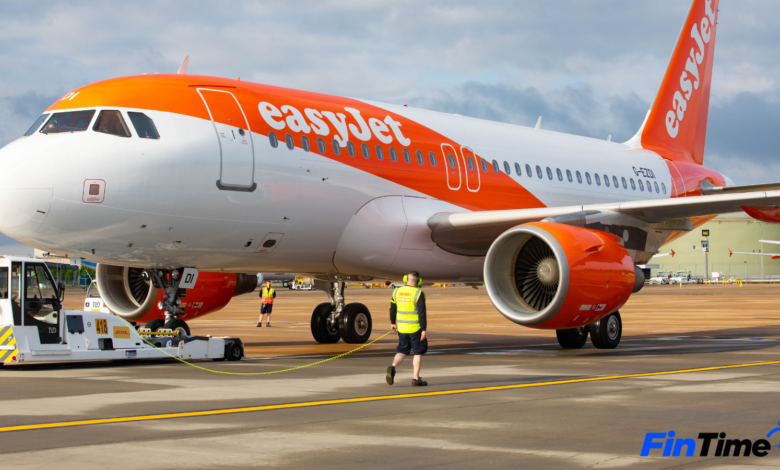
The incident behind this widely searched phrase involved an easyJet flight travelling from Copenhagen, Denmark, to Manchester, England. The aircraft diverted to Newcastle International Airport after a passenger reportedly required urgent medical attention. The aircraft landed safely, medical personnel met the passenger, and the flight subsequently continued towards Manchester.
Although the words “emergency landing” can sound alarming, an aircraft diversion does not automatically mean the plane has suffered mechanical failure or was close to crashing. In this case, the available reporting points to a passenger medical emergency rather than a confirmed aircraft malfunction.
What Happened on the EasyJet Flight?
The incident occurred on October 27, 2025, during a scheduled Copenhagen-to-Manchester journey. Contemporary aviation reports identified the aircraft as an easyJet Airbus A320-series passenger jet.
During the flight, a passenger reportedly needed urgent medical attention. Rather than continuing directly to Manchester, the crew diverted to Newcastle International Airport, where medical personnel could attend to the passenger after landing. Reports indicate that the aircraft later continued to Manchester.
The diversion interrupted the planned journey, but the reported outcome was a safe landing rather than an aircraft crash. Public information does not establish the passenger’s diagnosis, the full medical circumstances, or every detail of the crew’s decision-making. Those details should not be guessed at or presented as confirmed facts.
Why Was Newcastle Chosen?
Pilots may divert when a passenger needs urgent medical care. The appropriate airport depends on several factors, including the aircraft’s location, weather, runway availability, air traffic conditions, airport facilities, and how quickly assistance can be provided.
Newcastle offered a place for the aircraft to land and for medical responders to meet the passenger. Without a detailed statement from the airline or crew, it would be speculation to claim that one particular operational factor determined the choice.
Was the Aircraft Experiencing a Technical Problem?
There is no reliable public confirmation in the reporting reviewed that a mechanical failure caused this diversion. The reported reason was a passenger’s need for urgent medical attention.
That distinction matters. An aircraft can divert because of a medical emergency even when its engines, flight controls, and other systems are operating normally. The decision is about responding to the situation safely and promptly, not necessarily about a defect in the aircraft.
The fact that the plane reportedly continued to Manchester after the Newcastle stop is consistent with the published account, but it should not be treated as proof of every aspect of the aircraft’s technical condition. Only appropriate maintenance records or an official investigation could establish specific technical findings.
What Does Squawk 7700 Mean?
Some aviation reports associated with the event refer to squawk 7700, the transponder code used to signal a general emergency to air traffic control. This code alerts controllers that an aircraft requires emergency handling or priority.
It does not, by itself, tell the public what went wrong. The code can be used in different emergencies, including situations involving a passenger who needs urgent medical attention. It is therefore incorrect to interpret squawk 7700 alone as evidence of engine failure, fire, or imminent aircraft loss.
The Important Flight-Number Confusion: U2238 or U22238?
One of the most important details in this story is the difference between two similar flight numbers. Online headlines can repeat an incorrect or shortened number, causing readers to associate an incident with the wrong route.
Flight-tracking records distinguish the flights as follows:
| Flight identifier | Route or meaning |
|---|---|
| U2 2238 / U22238 | The Copenhagen-to-Manchester service associated with the reported diversion |
| EZY2238 | The operational flight identifier used in reports about the same incident |
| U2 238 / U2238 | A separate easyJet service associated with Newcastle to Bristol |
Flightradar24 lists U2238 as a Newcastle-to-Bristol service, while the emergency-landing coverage identifies the diverted Copenhagen-to-Manchester flight as U2 2238 or EZY2238.
This difference is more than a technical detail. A reader searching for the incident may see current schedules for Newcastle–Bristol and mistakenly assume that those records describe the emergency diversion. They do not refer to the same flight number.
For accuracy, publishers should retain the requested keyword in the headline or metadata if it is important for search visibility, but explain the discrepancy near the beginning of the article. That approach serves readers better than repeating a potentially misleading flight identifier throughout the text.
A Timeline of the Reported Incident
The following timeline summarises the broad sequence described in published aviation coverage. It deliberately avoids presenting every reported timestamp as independently verified.
- October 27, 2025: An easyJet service departed Copenhagen for its scheduled destination, Manchester.
- During the flight: A passenger reportedly required urgent medical assistance.
- Diversion decision: The crew changed the flight’s destination to Newcastle International Airport.
- Safe landing: The aircraft landed at Newcastle, where medical personnel met the passenger.
- Journey resumed: After the stop, the aircraft continued towards Manchester, according to reports.
The key point is that a diversion changes the planned route to respond to a situation that requires attention. It does not necessarily mean that the aircraft itself is damaged or that every passenger is injured.
What Happens When a Passenger Has a Medical Emergency on a Plane?
Medical emergencies can occur on any passenger flight. Cabin crews are trained to respond to onboard incidents, and airlines have procedures for communicating with pilots and seeking medical support.
Step 1: Cabin crew assess the situation
Crew members may provide first aid within their training, assess the urgency, and seek assistance from medically qualified passengers where appropriate. The precise response depends on the circumstances and the equipment available on board.
Step 2: The pilots consider the available options
The flight crew can consult relevant operational and medical information and coordinate with air traffic control. Depending on the urgency, they may continue to the destination, land at a nearer suitable airport, or request emergency priority.
Step 3: The aircraft diverts if necessary
A diversion is a practical safety measure. The crew weighs the need for medical assistance against the operational conditions and chooses a suitable airport.
Step 4: Medical teams meet the aircraft
After landing, emergency responders can reach the affected passenger. Other passengers may be asked to remain seated or follow crew instructions while the situation is managed.
Step 5: The airline determines the next steps
The aircraft may continue its journey, remain on the ground, or require further operational checks. Passengers should rely on airline announcements for specific arrangements rather than assume every diversion follows the same process.
In the Newcastle incident, public reporting describes medical assistance followed by the flight’s continuation. The passenger’s subsequent condition was not publicly confirmed in the sources reviewed.
Was Anyone Injured, and Was the Plane Safe?
The published accounts reviewed describe a safe landing and medical assistance for the passenger. They do not establish that anyone was injured as a result of the landing itself. The medical passenger’s diagnosis and later condition were not publicly confirmed in the available reports.
It is important to distinguish three separate questions:
- Was there an emergency? Reports describe a passenger-related medical emergency that prompted a diversion.
- Did the aircraft land safely? Yes, according to the available reporting.
- Was there a confirmed mechanical failure? No such failure was established in the reporting reviewed.
A safe landing is reassuring, but responsible reporting should not go beyond what the evidence supports. Without a published investigation or additional official details, claims about the passenger’s condition, the precise medical cause, or the aircraft’s full technical status would be premature.
What Should Passengers Do After an Emergency Diversion?
An unexpected landing can leave travellers worried about connecting flights, accommodation, baggage, and arrival times. A few practical steps can make the disruption easier to manage.
1. Follow the cabin crew’s instructions
Remain seated when instructed, keep your seat belt fastened when required, and wait for permission before leaving the aircraft. Even after a safe landing, crew members may need time to coordinate with airport staff and emergency responders.
2. Check official airline updates
Use the easyJet app, your booking details, airport departure boards, and messages sent by the airline. Flight-tracking services can help show an aircraft’s route, but they do not replace the airline’s instructions about rebooking or onward travel.
3. Keep receipts for reasonable expenses
If a disruption creates extra costs, retain receipts for food, transport, or accommodation. Whether those expenses can be reimbursed depends on the circumstances, applicable passenger-rights rules, and the airline’s obligations.
4. Ask about onward travel
A diversion does not guarantee that passengers will be transported to their original destination on a particular schedule. Ask airline staff whether the flight will continue, whether alternative transport is available, and what to do if you have a separate connection.
5. Check your passenger rights
For flights covered by UK passenger-rights rules, eligibility for assistance, rerouting, reimbursement, or compensation depends on the specific facts and applicable regulations. A medical emergency involving a passenger may be treated differently from a delay caused by circumstances within an airline’s control.
For authoritative guidance, consult the UK Civil Aviation Authority’s passenger advice and the easyJet official website. Avoid assuming that compensation is automatically payable simply because a flight diverted or arrived late.
How Common Are Emergency Diversions?
Commercial aviation is designed around multiple layers of safety procedures, including crew training, air traffic control coordination, maintenance programmes, and emergency planning. A diversion is one of the options available when continuing to the planned destination is not the most appropriate course of action.
However, there is an important statistical limitation in this particular case: the sources reviewed do not provide a reliable, incident-specific figure for how often easyJet flights divert for medical reasons, nor do they establish a complete statistical comparison between medical diversions and technical diversions on this route.
It would therefore be misleading to invent a percentage or claim that this incident was exceptionally rare based on the flight number alone.
For broader aviation safety statistics, readers can consult the International Air Transport Association (IATA) and the UK Civil Aviation Authority. These organisations publish aviation safety information and guidance that can place individual events in a wider context.
The most useful takeaway for travellers is straightforward: an emergency diversion is a response to a situation requiring attention, not proof that a crash was imminent.
Common Mistakes to Avoid When Reading Emergency Landing Reports
Breaking aviation news can spread quickly, particularly when flight-tracking websites show an unexpected change of route. Readers and publishers should watch for several common errors.
Mistake 1: Treating a diversion as a crash
An emergency landing can be completed safely. Avoid headlines or social media posts that suggest a crash occurred when reports describe a safe landing.
Mistake 2: Confusing similar flight numbers
As explained above, U2238 and U22238 identify different services. Check the flight number, route, date, and airline statement before sharing a report.
Mistake 3: Assuming the aircraft had a technical fault
A passenger medical emergency can be sufficient reason to divert. Do not claim engine trouble or aircraft damage without credible evidence.
Mistake 4: Sharing unverified passenger details
Medical information is private. Unless reliable reporting establishes a detail, avoid speculation about the affected passenger’s identity, diagnosis, or recovery.
Mistake 5: Relying exclusively on social media
Flight-tracking data can help establish a route or landing time, but it cannot necessarily explain why the crew made a decision. Prefer airline statements, airport information, reputable news coverage, and official aviation sources.
Conclusion
The story behind EasyJet Flight U2238 Emergency Landing Newcastle highlights why accurate flight identification and careful reporting matter during aviation incidents.
The available reports describe an easyJet service travelling from Copenhagen to Manchester on October 27, 2025. After a passenger reportedly required urgent medical attention, the crew diverted to Newcastle International Airport. The aircraft landed safely, medical personnel met the passenger, and the flight subsequently continued towards Manchester.
The most important clarification is that the incident involved U2 2238 (U22238/EZY2238), not the separate U2238 Newcastle-to-Bristol service. There is also no confirmed evidence in the reviewed reporting that a mechanical failure caused the diversion.
For passengers, the practical lesson is to follow crew instructions, monitor official airline updates, retain receipts for additional expenses, and check applicable passenger-rights guidance if a journey is disrupted.
For readers following the incident, the best approach is to prioritise verified information over speculation. A diversion can be an important safety decision, and understanding the facts helps explain what happened without creating unnecessary alarm.
FAQs
What happened to easyJet Flight U2238 in Newcastle?
The search phrase refers to an incident involving an easyJet Copenhagen-to-Manchester flight that diverted to Newcastle on October 27, 2025, after a passenger reportedly needed urgent medical attention. The flight number was U2 2238, also written U22238 or EZY2238, rather than the separate U2238 service.
Why did the easyJet flight make an emergency landing?
Published reports identify a passenger medical emergency as the reason for the diversion. The aircraft landed safely at Newcastle, where medical personnel met the passenger.
Did the easyJet plane crash at Newcastle Airport?
No. The available reports describe a safe landing following a diversion. They do not describe an aircraft crash.
Was the emergency caused by engine failure?
No engine failure was confirmed in the reporting reviewed. The reported reason for the diversion was a passenger requiring urgent medical attention.
Did the aircraft continue to Manchester?
Yes. Reports state that the aircraft continued towards Manchester after landing at Newcastle and allowing medical personnel to attend to the passenger.
What does flight number EZY2238 mean?
EZY2238 is the operational identifier associated with easyJet flight 2238 in the reports about this incident. The commercial flight number is written as U2 2238 or U22238.
Is easyJet flight U2238 the same flight?
No. Flight-tracking records associate U2238, or U2 238, with a separate Newcastle-to-Bristol service. This distinction is important when searching for the October 2025 diversion.


One Comment